Italian Wine Club Arrivals

I have written before about the joys of being on a Wine Club and receiving cases of wine, never quite sure what the contents are going to be – The only thing assured is that the bottles will be great quality and there will always be a surprise in store when unboxing the arrival.

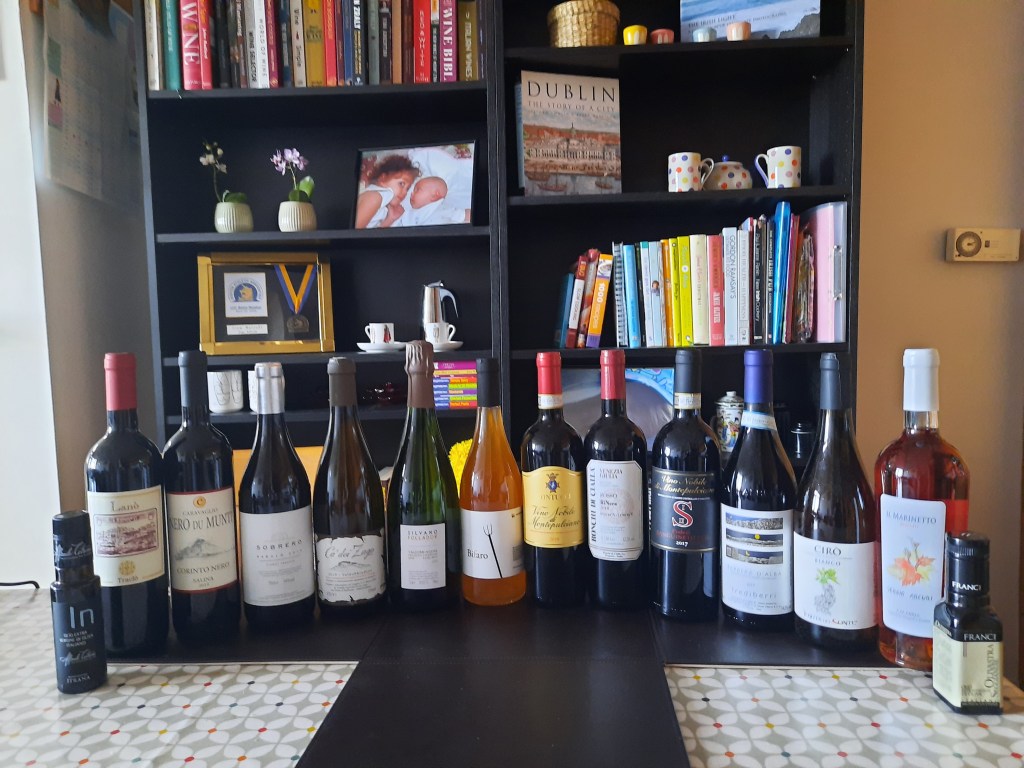
Well, this week, my bi-annual case from Rome, from the Roscioli Wine Club, arrived on my doorstep, taking only 4 days from Rome to Dublin, so what better time to share with you the delights.

Given the twelve bottles of wine and the two extras of Olive Oil each have a story to be told, I thought I’d split the overview into two parts, so as to keep you from falling asleep, but then again, it may help the insomniacs among us.

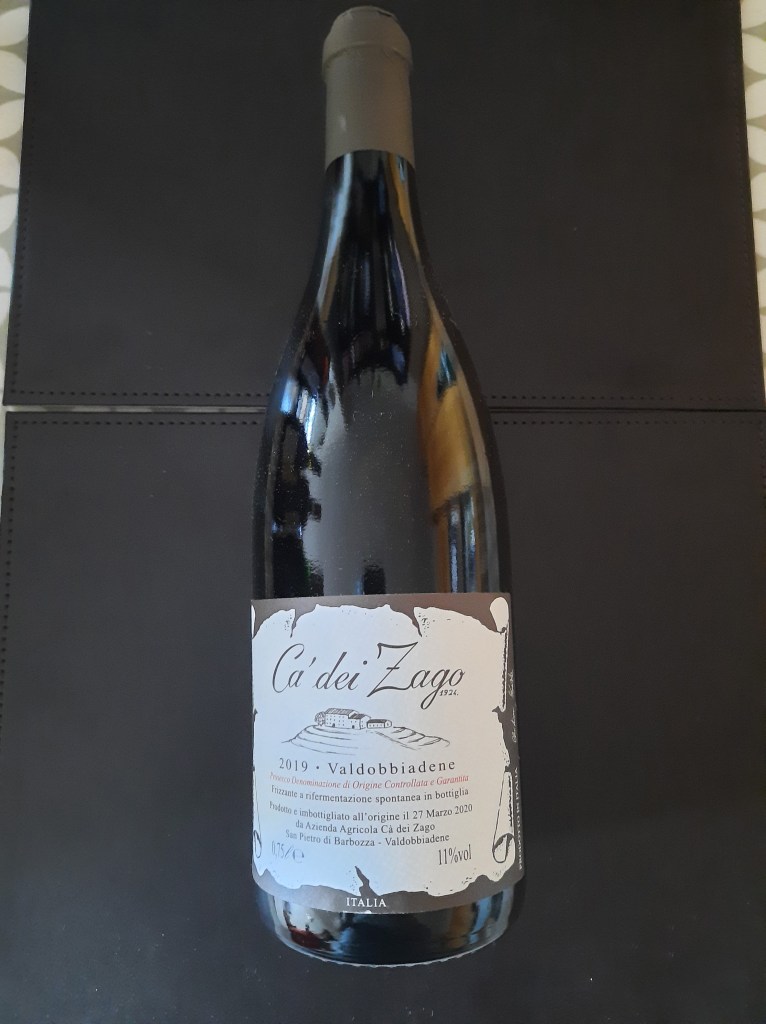
First out of the box was this Prosecco Col Fondo, 2019 – ValEI ZAGO


Grapes: Mainly Glera, little percentages of Verdiso, Bianchetta and Perera
Region: Valdobbiadene (Treviso) – Veneto
Pairings: Great as aperitivo, with various tapas and fried fish. Pairs well with warm fish appetizers and a salmon or swordfish tartare.
Drink By: Ready.Notes: Vines of 50 years at 400 metres of altitude on typical soil with limestone and clay. Spontaneous fermentation in cement tanks with indigenous yeasts, while the second fermentation happens in the bottle.
Description: Christian, despite his young age, can already be defined as a master of natural elements, who is making a spontaneous fermented Prosecco which will shock your palate if you think that Prosecco is only a cheap, soft and easy drinking wine. Water, rainwater intended, is collected and recycled for treatments. The earth, being aware that the fertility of its soil is like a boomerang, which if fed over the years with small adjustments, allows the vineyard to be healthy. The air, on the other hand, which circulates continuously in Valdobbiadene’s prestigious hills of Cartizze and Farra di Soligo, allows the vines to be free of pests. And finally, fire, of passion and dedication of a young man capable of going against the flow and against the slope; but always yielding and respectful of the Moon.

NOBILE DI MONTEPULCIANO D.O.C.G., 2015
CONTUCCI


Grape: Prugnolo Gentile 80%, Canaiolo Nero 10%, Colorino 10%
Region: Montepulciano (Siena) – Toscana
Pairings: Red meat, salami, pasta with ragout and legumes soups.
Drink by: Ready or before 2026.
Notes: After the harvest in the first days of October, the vinification happens while mixing together all the 3 different grape varieties, Prugnolo Gentile, Canaiolo e Mammolo, since the beginning, otherwise the must could have rejections. They follow a fermentation with a long maceration, for at least 20 days. This Nobile is marketed after the second year of aging in wooden barrels, both French and Slavonian barrels.
Description: The origin of this winery is extremely ancient, indeed they are trying to follow the wine techniques of the Etrurian. The soils are mainly of Pliocene origin, with the presence of clay and sand. The oldest sources would trace the origins around the year 1000 AD. What is certain is that already in the mid-fourteenth century the Contucci were among the most prominent families in the city of Montepulciano. Their cellar is very old with natural thick walls, allowing them to keep the temperature steady. The vineyards of this winery are located in one of the best production areas, the altitude varies between 280 and 450 meters.

BIFARO, 2019
CALABRIA I.G.T.
MASSERIA PERUGINI


Grapes: Mantonico, Malvasia Bianca
Region: San Marco Argentano (Cosenza) – Calabria
Pairings: Grilled fish or squids, fresh cheeses as mozzarella di bufala or ricotta, linguine with clams or shrimps.
Drink By: Ready or before 2023.Notes: Vines cultivated at 400 meters above sea level with south exposition on the steep ground of the calcareous and clayey soil. Continuous microventilation and the presence of various sources prevent possible landslides and allows organic agricolture.
Description: The Bifaro is a concentrate of sun, sea and Mediterranean scrubland of Calabria. It is a macerated white wine of great expressiveness and taste-olfactory richness. On the nose a whirlwind of Mediterranean spices, aromatic herbs, citrus and salty puffs introduce a fresh, enveloping and warm taste.

LANO’, 2016
PALIZZI I.G.T.
TRACLO’ VINI


Grapes: Nerello Calabrese, Castiglione
Region: Bova (Reggio Calabria), Calabria
Pairings: Grilled meat. Pairs great with any kind of game meat. Nice pairing with a legumi soup with a crispy garlic bruschetta.
Drink by: Ready or before 2022.
Notes: The vines are trained in sapling, no treatments are made, not even with copper, in these places there is no need, apart from a few rare cases in which a little sulfur is used with the classic tank on the shoulder.
Description: This Calabrian wine presentes itself with immediate energy. A wine with a powerful Ionic three-dimensionality that translates high mountain climatic conditions mitigated by the sea breeze and the eastern sun of Magna Graecia. Balsamic, juicy in the throat, sanguine. An happy condensation of Mediterranean scrub, helichrysum, licorice and pipe tobacco.

SCHIOPPETTINO “RINERA”, 2018
RONCHI DI CIALLA


Grape: Ribolla Nera (Schioppettino) 100%
Region: Prepotto (Colli Orientali) – Friuli Venezia Giulia
Pairings: Great with a Cacio & Pepe pasta. Also a nice risotto with a rabbit or duck ragout, fettuccine with mushrooms and parsley, and even grilled lamb.
Drink by: Ready, but it can rests some more years.
Notes: Alcoholic fermentation occurs in steel tanks, with malolactic fermentation. This RiNera ages for 12 months on the lees. The vines are surrounded by forests and their philosophy is biodynamic-friendly. The production does not exceed one kilo of grapes per plant, and the harvest is strictly manual with immediate control and fast vinification.
Description: A strictly family-run winery, Ronchi di Cialla was founded in 1970 by the spouses Dina and Paolo Rapuzzi, who embarked on a specific path of life to which, today, their sons Ivan and Pierpaolo, both agricultural experts, have joined. Located in the province of Udine and exactly in Cialla di Prepotto, this winery takes its name from the valley in which it is located, in whose hills traditionally native grape varieties are grown. The estate has about 26 hectares of vineyards in total, which are conducted according to an integrated agriculture with a very low environmental impact, which exclusively involves the use of contact or organic products, respecting the ecosystem and the balance to the maximum. environmental.

CIABOT TANASIO, 2015
BAROLO D.O.C.G.
FRATELLI SOBRERO


Grape: Nebbiolo 100%
Region: 
Castiglione Falletto (Langhe) – Piemonte
Pairings: 
Roasted guinea fowls, aged cheeses, red meat, rich/earthy dishes, truffle risotto, pasta with sausages and mushrooms.
Drink by: Ready or by 2025.
Notes: Controlled fermentation and maceration in steel with hair submerged for about 35 days. Malolactic fermentation in steel and matures for at least 24 months in 25 and 50 hl oak botti. Bottling without filtration.
Description: Ciabot Tanasio, an antique name encompassing more than 70 years of history made by the Sobrero family, attentively working the vineyards of the rolling Castiglione hills to obtain their delicate nectar. The nose releases complex varietal aromas, with pungent notes of autumn leaves and spice, complemented by nuances of tanned leather, liquored dried plum, black liquorice, and cocoa powder. The palate develops impressive fruit, bolstered by a solid charge of tannins that will become supple with bottle ageing. A lively acidity drives a lengthy finish well laced with savoury, succulent fruit.

PROSECCO SUPERIORE BRUT NATURE, 2019
VALDOBBIADENE – CONEGLIANO D.O.C.G.
SILVANO FOLLADOR


Grape: Glera 95%, with small percentage of Verdiso, Perera and Bianchetta
Region: Valdobbiadene (Treviso) – Veneto
Pairings: Perfect with finger food and fried squids, also with a vegetable based pasta.
Drink by: Ready.
Notes: First fermentation with indigenous yeasts in steel or concrete tanks, aging on the lees for 6 months and second fermentation according to the Charmat or Martinotti Method, without sugar dosage.
Description: Silvano Follador is a man capable of doing all the jobs, capable to reflect his pragmatism inside the bottle; but at the same time does not disdain the concept of beauty, which always tries to express in its wine. Nevertheless, this does not take away the immense effort of managing his 3 hectares, which he looks after alone as if they were his children, who are able to gave him satisfaction. He is a man who does not intend to lose any aspect of production, with a scrupulous control of every single moment, from harvest untill bottling. A firm hand is needed to tame the power of Glera, but at the same time a maniacal dedication that allows him to develop an unprecedented elegance in the glass.

CIRO’ D.O.C. BIANCO, 2018
TENUTA DEL CONTE


Grape: Greco Bianco 100%
Region: 
Cirò (Crotone) – Calabria
Pairings: 
Pairs great with fish in general, like fish soups or clams linguine. Also with an amberjack or octopus carpaccio.
Drink by: 
Ready or before 2023.
Notes: 
Spontaneous fermentation with indigenous yeasts. Malolactic fermentation carried out entirely in a natural way.
Description: 
The Parrilla family has been making wine in Cirò for four generations. Francesco Parrilla, born in 1936, has been working in the countryside since he was 12 and still follows the work in the vineyards with dedication. In 2002 he decided to start bottling on his own and later to bring his daughter Mariangela into the company, a very important turning point for this winery. Mariangela is the first “Cirò girl”, the new generation of vignerons who for some years have been rewriting the history of Calabrian enology. Tenuta del Conte extends for 15 hectares of vineyards, grown organically on the gentle slopes of the Cirotane hills. Only Greco Bianco and Gaglioppo grapes are grown, as tradition dictates. This Greco stands out for its intense nose, with hints of elderberry, broom, chamomile flowers, citrus, Mediterranean scrub. On the palate is fresh, savory, with a fairly long finish.

“IL MARINETTO” ROSATO, 2019
SERGIO ARCURI


Grape: Gaglioppo 100%
Region: Cirò Marina (Crotone) – Calabria
Pairings: Pairs nice with a charcuterie combination or with a fish soup. Great with fish or octopus stews.
Drink by: Ready or before 2023.
Notes: After fermentation, the wine matures in steel to preserve the elegant freshness of its fruity aromas.
Description: This is a rosé wine of great personality, freshness and minerality, vinified with indigenous yeasts in steel. The notes of red fruit and citrus are the introduction of a delicate and romantic plot, which tells the story of the Calabrian territory in every sip. A sip that enchants from the first drops, self-confident. It has a good structure that is rare to find in rosé wines, granted with elegance starting from its softness. This wine expresses itself on the savory, slightly tannic finish, supported by a penetrating acidity that makes it almost unique in its kind.

NOBILE DI MONTEPULCIANO, 2017
PODERI SANGUINETO


Grape: Sangiovese (known as “Prugnolo Gentile”) 80%, Canaiolo and Mammolo 20%
Region: 
Montepulciano (Siena) – Toscana
Pairings: 
Red meat, salami, pasta with ragout and legumes soups.
Drink by: 
Ready or before 2024.
Notes: 
The grapes are harvested by hand, put into crates, and are immediately brought to the cellar for destemming. Spontaneous and natural fermentation without addition of yeasts, pumping twice a day during fermentation with the marc sinking. Duration of maceration takes around 8-10 days.
Description: 
The winery, which belongs to Dora Forsoni who inherited it from the father, owes its name to a historic battle, which saw the Roman army opposed to the Etruscan one. According to the legend, the clash was so bloody that the lands on which today the Poderi lie, theater of the battle, became red with blood (“sangue” in Italian), hence the name “Sanguineto”. Wide and multifaceted, after two years spents in oak barrels, it perfectly integrates fruit and spices. Driven by an unusual lightness for the denomination, allows a “compulsive” sipping.

“NERU DU MUNTI” CORINTO NERO, 2019
CARAVAGLIO


Grape: Corinto Nero 100%
Region: Isole Lipari (Messina) – Sicilia
Pairings: Grilled meat. Pairs great with any kind of game meat. Nice pairing with a legumi soup with a crispy garlic bruschetta.
Drink by: Ready, but it can rest for over 5 years.
Notes: South-west exposure of the vineyards at 300 meters above sea level. The wine rests partly in oak and partly in steel for a year.
Description: Corinto Nero is a native and autochthonous grape variety of the volcanic Aeolian Islands. The vineyards are located in Lipari, in the old crater of Fossa del Monte. The vine survived the phylloxera attacks thanks to the soil composed of ash, sand and pumice. This wine is made from centenary vines, ungrafted, (about half a hectare) and re-grafted (one hectare of new plants).


BARBERA D’ALBA D.O.C., 2019
TREDIBERRI


Grape: Barbera 100%
Region: La Morra (Langhe) – Piemonte
Pairings: The perfect match should be with some home-made “Tortellini” in meat broth. Pairs great with a mushroom risotto, stewed and grilled red meat, grilled poultry and lightly aged cheeses.
Drink by: Ready or by 2025.
Notes: Grapes coming partly from Roero and partly from the vineyards around Borgata Torriglione, near the winery. Barbera is the only vine where Nicola Oberto limits the production and yield per hectare. Alcoholic fermentation takes place exclusively in cement and lasts about 12-15 days. Malolactic fermentation follows in cement or steel. After stabilization, the wine continues to refine for a few months in concrete, steel or fiberglass, before being bottled.
Description: A naked and raw Barbera, not smoothed by any passage in barriques and indeed characterized by a sharp acidity and by an important alcohol content. A full-bodied wine, but with a shorter finish if compared to a Nebbiolo. Nicola believes in a fresh and ready-to-drink Barbera, without frills. This Barbera has a good acidity; helped by scents of red and black fruits, such as plums and currants.


EXTRA VIRGIN OLIVE OILS

Alfredo Cetrone


Olive: 100% Itrana
Region: Sonnino (Latina) – Lazio
Pairing: Ideal raw on crudités, artichokes, and mushrooms of the forest floor, farro and legume salads, carpaccio and tartare of beef, and fish, raw shellfish, marinated fish, soups, vegetables and legumes, risotto, grilled fish, grilled white and red meats, raw and cooked vegetables, fresh and mature, hard and spun cheese.
Notes: 
Manually harvested in October/November. This monocultivar EVO oil has the DOP certification. Extraction method occurs with cold-crushing in a continuous-cycle plant.
Description: The influence of the sea air, the almost continuous exposure of sunglight, the shape of the rocky terrain, the altitude of the olive groves, and the extreme care and attention put into the process of production and transformation, determine the quality of Cetrone Extra Virgin Olive. Their Extra Virgin Olive Oil is extracted exclusively from Cetrone “Monocultivar Itrana” olives, which are healthy, fresh olives hand-picked directly from the tree and pressed the same day, employing a rigorously cold procedure. Its green color with golden reflections, intense fruity flavor with a harmonious hint of almond, a fragrant aroma, and low oleic acidity (always less than 0.2 %), qualify it as truly unique among the extra virgin quality. The essence of Cetrone Extra Virgin Olive Oil is defined by its naturalness, its exceptional organoleptic characteristics, the low oleic acidity, and by its many recognizable therapeutic qualities.


Franci


Olive: 100% Frantoio 
Region: Montenero d’Orcia (Grosseto) – Toscana
Pairing: It matches perfectly with beans starters, grilled red meat, salmon carpaccio, tomato salad, amberjack marinade, cream of legumes, artichoke risotto, gratin shellfish, grilled squid, baked rabbit, grilled chicken and goat cheese.
Notes: 
Hand-picked in October/November. Extraction method occurs with cold-crushing in a continuous-cycle plant.
Description: Franci Olive Farm was established in the 1950s on the hills of Montenero d’Orcia, a small hamlet at the foot of Mount Amiata, which dominates the landscape of the Orcia Valley in Tuscany, when brothers Franco and Fernando Franci purchased a historic olive grove called Villa Magra and renovated an ancient barn to turn it into an olive mill. The year 1995 represents a turning point for the history of the farm. In fact, it marks the collaboration between Fernando and his son Giorgio, who adds to his dad’s experience a new charge of enthusiasm and entrepreneurship.
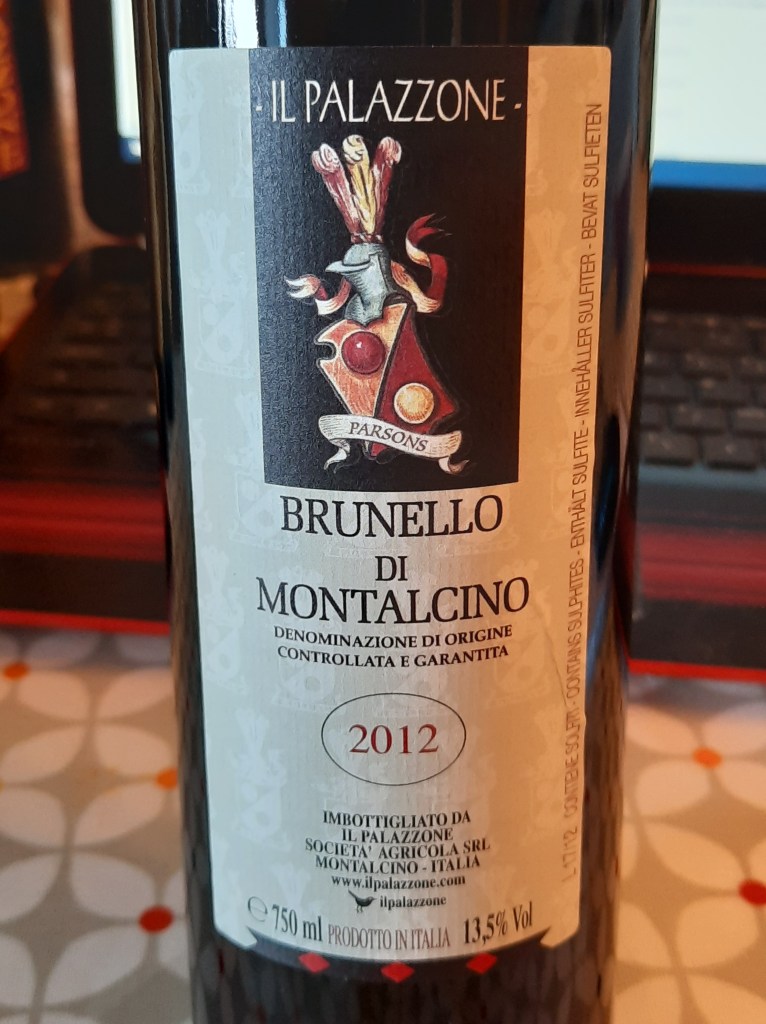
Il Palazzone Brunello di Montalcino 2012.

The first of my 2012’s. Opened for Christmas Eve Dinner, with rib of beef, roast potatoes, the ubiquitous Sprouts tossed with pancetta, and puree of carrot & turnip. I decanted it for 2 plus hours before tasting.

Absolutely perfect.

Bright ruby colour, aromas of cherry leaping out from the decanter as I poured into the glass. The full nose showed cherries, plums, oaky vanilla, and then onto the palate and my taste buds. The explosion of fruit, red berries, the cherries again, all in abundance. Good acidity held everything together, with the tannins mellowed with the ageing process, both from the Slovenian barrels, and latterly the bottle ageing. The finish was lengthy, with the aftertaste of ripe fruits lingering in the mouth, long after the glass had returned to the table.

I was fortunate to visit the winery in 2019, and have since started to build different vintages of their Brunello. This was the first of my 12’s, and although this was a perfect example, and drinking divinely, there may well be more to come, and I look forward to exploring further developments of this excellent wine.

Zooming in on Pinotage

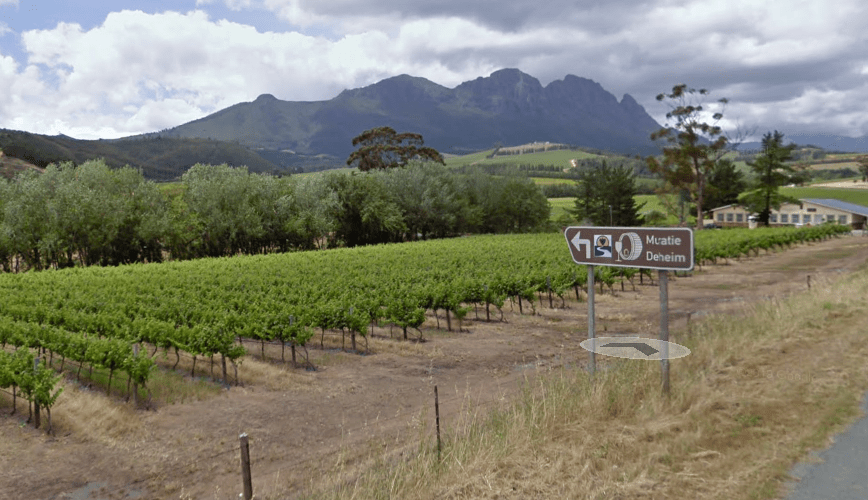
The road to Delheim, Stellenbosch, South Africa

I have a confession to make – My previous experiences with South African Pinotage has not been great. I admit it hasn’t been extensive, but past forays into this grape, the crossing of Pinot Noir and Cinsaut (known as Hermitage in South Africa, hence the combined name), have found a bold, jammy red wine, that hasn’t enthralled.

However, having built a global network of like minded friends over the year that has been 2020 around a mutual enjoyment of The Wine Show, the friendships have moved on to our own regular Zoom get togethers, sipping a wine, and enjoying conversations. The “Global Gang” has incorporated Canada, the US, Germany, The Netherlands, the UK, and myself in Ireland, and this week, Shawna, one of our American participants, suggested that we all seek out a Pinotage, and see what we think.

I did a little research, and Pinotage is not a very popular style here in Ireland, making the choices limited. I understood that Kanonkop was the brand to seek out, but with the problems that South African Wineries have been facing under the Covid Regulations in their homeland, where a complete ban on alcohol was in force for long periods, the ability to import their wines has been dealt a significant blow, and supplies were difficult to source.

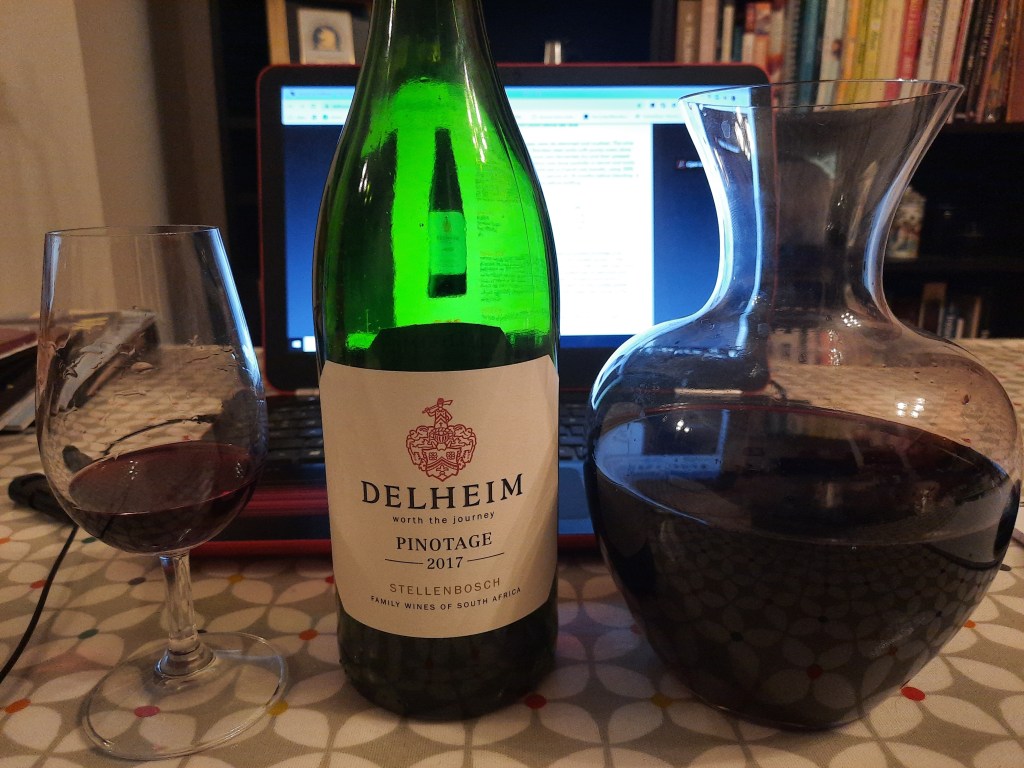
A discussion with the Manager of my local Wine Store lead me to a winery I was familar with for their excellent Chardonnay, and located just down the road from the Kanonkop Winery in Stellenbosch, the family owner Delheim Winery Estate, on the slopes of the Simonsberg Mountain. With a ringing endorsement, I took the 2017 home with me, and looked forward to the tatsting.

A post on Twitter seeking advice on decanting, lead me to opening the bottle around 90 minutes beforehand, taking a taste at the time. Clearly the wine was closed, and I hoped that the decant and the air would seek its reward.

It did….

In fine style. Once we were all on line, chatting away, I poured myself a glass, and the rich crimson coloured liquid emerged into my glass. A very strong aroma of red fruits, strawberries and raspberries was prevalent, with hints of vanilla, leading me to believe some oak was in play.

With the strong fruits, I was expecting, from past experiences, a jammy mouthful, but was pleased to note that the fruits mellowed in the mouth, with moderate acidity, and balanced tannins, allowing the flavours to expand on the palate, cranberries, plums, a slight earthiness, and although the alcohol level was reading 14%, there was no burning sensation on the finish that didn’t overstay its welcome, rounding off an enjoyable glass.

My friends enjoyed varying styles, in various countries, with a couple of bottles showing coffee, mocha, hints to their wine, and another finding their choice shared the jammy sensations of ripe fruit. I definitely struck an educational wine, given my pre-conception that I was drinking a grape, and style that I wasn’t going to enjoy. I was very pleasantly surprised by the wine, and while it may not displace my usual array of wines gathering dust on my racks, I would be happy to return to Stellenbosch and Pinotage of this quality in the future.

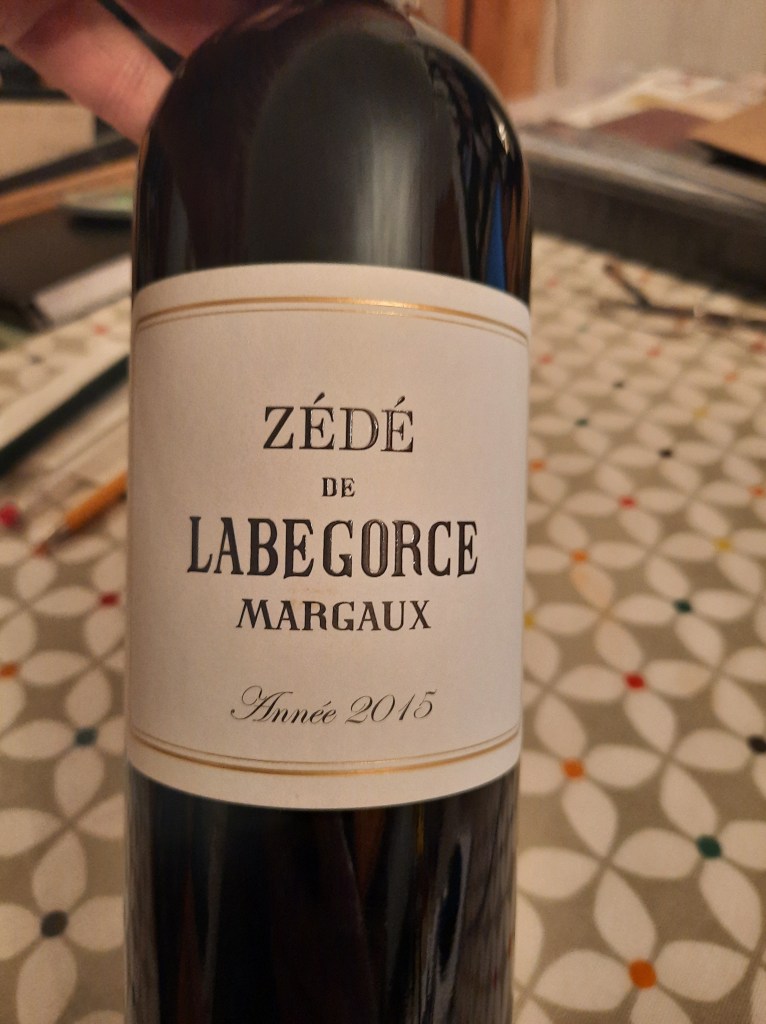
Zoom and Margaux – Zede de Labegorce 2015

Given the unusual circumstances we find ourselves in during 2020 (a year to forget!), my Wine Club has taken to Zoom, and we “tasted” two bottles last night, with this being the Red of choice, (The White Burgundy to be reviewed later). Unlike a normal tasting where a small sample is sipped and dissected, in my case as well as sipping and discussing, I finished the bottle off later in the evening with my dinner.

Initial impression I had was that this was still too young, at 5 years old, possibly more atune to the fact I didn’t decant and let aerate for long enough before the chat began. For a Margaux with 50% Cab Sauvignon, the nose felt flat, difficult to gain any fruit, in fact, difficult to get any distinctive aromas. In the mouth, there was the usual flavours of black, bramble berries, with a hint of smokiness, and the vanilla essence you always get from oaked Bordeaux, albeit subtle in this case. There was a hint of mint or eucalyptus also there, and the tannins, although not gripping, were still present long after a swallow.

As I said, initially I wasn’t overly impressed, but as the chat went on, and we righted all the wrongs in the World of Lockdowns and Elections, and I later returned to the wine, it had opened up more, giving a more flavoursome release of aromas, and softened on the palate.

As I say, I do believe that this will develop and improve with a few years hiding away in a dark cellar, although if decanted and allowed to breath and open up, it is certainly drinkable now, and my final impressions, changed from the first, were of a very satisfactory second wine from a top Margaux Chateau.

Recommended (Possibly wait until 2025 to see it at its best)….

A Musical Interlude

I was honoured to be asked by my good friend Frankie Cook to be part of his Blog Series, the Frankly Wines & Friends Wine & Music Series recently, and after he gave me his selections, I wrote the following piece for his blog. For more in the series, check out his pages at www.https://frankstero.com/ for an excellent series, and insights into the mindset of many friends and colleagues in the World of Wine.

The Frankly Wines & Friends Wine & Music Series #15 – Liam Mycroft

frankstero

In these unusual times, we all need a lift from time to time. As a change to my usual wine reviews I’ve decided to start a fun and irreverent series on matching wine and music. The basic idea is that I give participants:

  • A piece of music –> they suggest a wine to go with it, with an explanation
  • A wine –> they suggest a piece of music to go with it

It’s all for fun, so please don’t slag off anybody’s taste music (or wine!) Thanks to Michelle Williams for the inspiration – she has been matching songs to wine for years on her Rockin Red Blog.

Our 15th guest contributor in The Frankly Wines & Friends Wine & Music Series is someone with an accent that is hard to pin down, but that makes perfect sense when you head his bio!  Liam came into wine geekery later than some others but has been making up for lost time, devouring wine knowledge (and wine bottles?) at a hectic pace.  After meeting at several consumer tastings he joined us in the Dublin North Side (DNS) Wine Club despite being a southsider.  After a few tastings he threw hit hat into the ring to present a tasting, and the favourite of the group that night is the Garzon which I picked for him below.

For music I picked a track from an artist we both love – Eric Clapton – but not one of the most obvious.  Bad Love is from his long hair period and is definitely more rock than blues, but it’s a classic.


It is with excitement and trepidation that I answer the request from Frankie to play a part in the wonderful Music and Wine Collaboration series. Excited to be asked, for sure, but the trepidation comes from following such illustrious giants from the Wine Gliteratti as James Hubbard & Jim Dunlop amongst a host of others. Frankie asked me a few weeks ago, but I had been tied up on a work project, meaning I didn’t have a lot of spare time to do justice to the cause, and lo and behold, the literary, musical and all round Wino genius, Lee Issacs, got in before me with his wonderfully descriptive scribblings. While Lee and I have never met in person, largely due to the present travel restrictions we find ourselves in, we share a common love of Argentina, and we both found our life partners roaming the Pampas, and this might explain our mutual love of Malbec, more of that to follow, as I now have to follow his words…

My musical tastes are very eclectic. Something to do with my advancing years, in that they range from the 60’s, the Beatles obviously (far better than the Stones!), through my formative years of the 70’s, with psychedelic sounds, before punk emerged, followed by a constant return to the 70’s as I got stuck in a time warp of music from that era. I still listen every week to Johnny Waler’s Sounds of the 70’s every Sunday afternoon. I have had a detour in recent years to embrace Country Music, yes, I know! It all came about from spending a few months working every year in the US back in the ’90s, and I fell for it… But I digress…

Eric Clapton – Bad Love

The Track that Frankie selected for me comes from one of my All Time Heroes, Slow Hand himself, Eric Clapton. Perhaps one of his lesser known tracks, from the 1989 Journeyman Album, “Bad Love”. Although it charted around the world, you don’t often hear it on the radio, and to be honest, although I have the album, I had forgotten the track over time. A pleasure to be reacquainted, and the lyrics rang very close to home. (This is where I turn sloppy and sentimental, which features from here on in, sorry).

The lyrics talk about being sad for the lonely people who walked through life alone for so long, as I did, but now having found their one true love, there would be no more Bad Love in their lives. This resounds with me, having met my wife late in life, after a failed marriage, and relationships in my younger days, but with all that behind me, having met Paula, my Argentine Rose, this song has new meaning.

Obviously as it reflected my life and how I had found my “Good Love” in Argentina, the wine I have selected to pair with the song, to remind me of every glorious moment, is of course, an Argentine Wine. Having been able to live just outside Buenos Aires for four years between 2009 and 2013, wines from the country became a staple, and I fell in love with Malbec as well as the woman.

I have selected a Malbec available here in Ireland, from Kaiken, ironically headed up by a Chilean, Aurelio Montes, from the Uco Valley in Mendoza. A truly memorable wine, the Kaiken Ultra Malbec is bright red in colour with an intense aroma emanating of spice and floral elegance, before the black fruits, so typical in a quality Malbec shine through. Smooth, soft tannins give way to a lengthy finish, and take me back to sitting outside in Buenos Aires as my brother in law stoked the Parilla (BBQ) and cooked an Asado to be washed down by a smooth Malbec.

Bodega Garzón Albariño

Of course, the journey doesn’t stop here, and Frankie, knowing my affection for South America, has selected an Albariño from Bodega Garzón in Uruguay for me to come up with a musical side dish to accompany this maritime delight. Albariño wines from Rías Baixas and Galicia have become very popular in Ireland in the past few years, and this Uruguayan version certainly reaches the giddy heights of the top Albariño’s Worldwide.

Pale yellow in colour, with a greenish tinge in the glass, on the nose the peachy summer fruit comes forward, with a hint of salinity, taking me to the seaside, and seafood. Citric flavours mingle with the pear in the mouth, and a long aftertaste reminds me of the smell of seaweed and brine as you walk along a coastline.

For some strange reason, my sentimentality came back to me every-time I thought about a musical pairing to go with this wine. The sea-salt took me to the Ocean, and a more local musician, with a song, not really about the ocean at all, but about life being a Voyage, and to Christy Moore, and his wonderful rendition of the Johnny Duhan penned song. The song talks about how life is an ocean, and love is a boat, and through troubled waters it keeps us afloat. https://www.youtube.com/embed/CkRSzhTeF34?version=3&rel=1&showsearch=0&showinfo=1&iv_load_policy=1&fs=1&hl=en&autohide=2&wmode=transparent

I’m not sure how a few bottles of Albariño would fare as we sail through life, but it took me back to finding my true love back in Argentina, and how we sailed the ocean back to Ireland (Ok, we flew, but its far more romantic to think of the journey being in a boat – romantic licence), and here we are, gathering around us our own crew of friends, making our life complete.

So there you have it. Two songs, two wines. The wines are linked, being both from South America, but the songs are dramatically different in their style, but are linked by their appreciation of Love and Life, hope you stayed the course.

Liam Mycroft

Having set sail for Liverpool as a 5 year old, before returning home at 40 plus, Liam has lead a roaming life, taking him from County Down to Dublin, via Liverpool, Salford, San Diego, Rhode Island, and Buenos Aires. He is a Civil Servant by day, and in recent years, a wine nerd at night and weekends. After a lifetime of living a cliché of drinking the same wines, because he liked them, upon his return from Argentina in 2013, he decided to learn more about the Grape, taking a local course with Leslie Williams, which enthused him to go down the road of the WSET exams, and, so far, he has passed Levels 2 and 3 with Merit. Next up for this self-confessed nerd is the Italian Wine Scholar Programme, as he has fallen in love with the myriad of wines from the Boot of the Mediterranean, and aims to kick on with his knowledge in the future, sharing his views via Twitter (@Liam3494) and blogging his personal wine thoughts at www.thelongwineroad.com.

A Wine Club Zoom Tasting

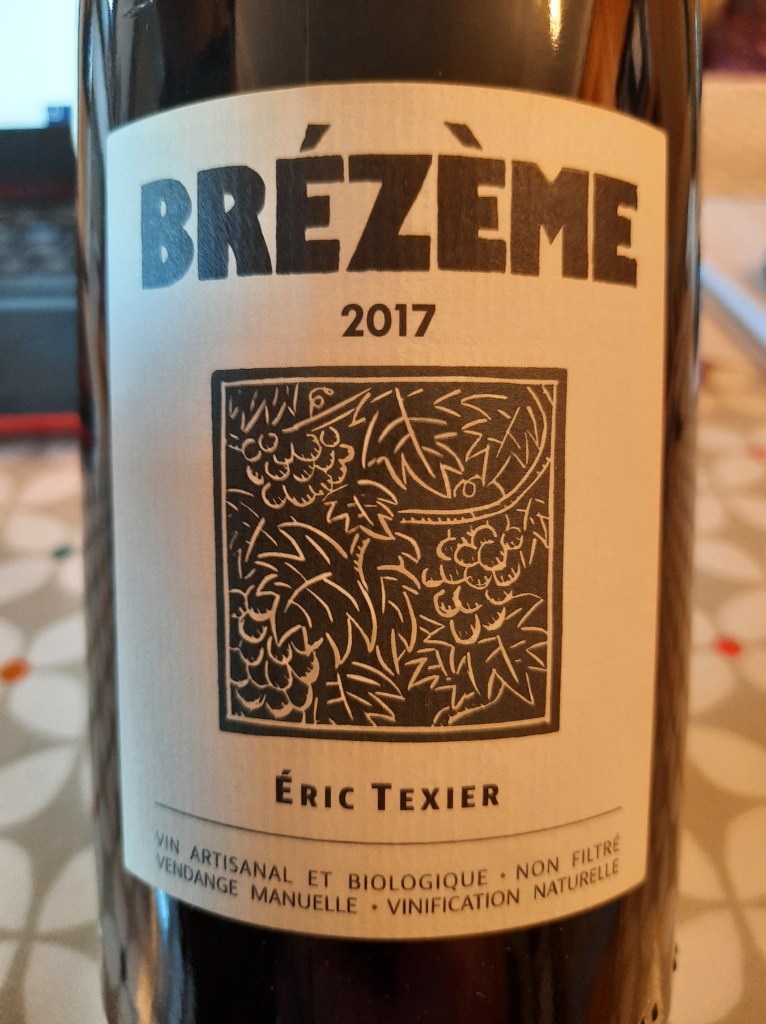
A Northern Rhone Syrah with a difference, was how this Brézéme from Eric Texier was described to me when I collected my bottle, and it proved to be the case. This bottle was purchased by my Wine Club for our members, so that we could have a Zoom Tasting Session, whereby we all had the same bottle, and we duly had the tasting last night which was an interesting way to do it.

The winemaker was unfamiliar to me, being less of a francophile than many, but I was aware that the wine was made with love and affection as Eric Texier has a reputation for putting his soul into his wines. They are organic, biodynamic, with the very minimum of sulphur added, which certainly made for something a little different.

My initial reaction to the wine was how dark and forebodding it appeared on pour, and a certain whiff of vegetal coming from the glass. I had opened the bottle around 20 minutes earlier, and in hindsight it probably needed a decant, and a longer aeration. But, once I stuck my nose in the glass (I wasn’t using my tasting glasses), beyond the vegetal there was a very pleasant fruit aroma coming through, dark fruits, blackberry, blueberry and plums.

But the palate was to disappoint. I go back to my lack of aeration, but while there was strong acidity, the fruit wasn’t as prevailing as the nose had lead me to expect. yes, there was fruit there, but the earthyness registered higher with my taste buds, and the tannins weren’t balancing everything out as can often be the case in a great wine. The aftertaste left a little be desired too, with a yeasty bitterness leftover in what was quite a short finish than I would normally expect with a Northern Rhone wine.

It was interesting how others in the Club described their own experiences with the wine, and as we all have different receptors that can often give us a different view of a wine, others may have a different view.

Overall, I was disappointed in the wine, as I had been expecting more, and while I can understand what Msr. Texier is trying to do, for me it just wasn’t working, and I don’t think I would be seeking out again. The general consensus of the Club was similar, with the added question as to how this might develop in the cellar over time. The other caveat I would have would be that different vintages would have a different profile, as 2017 was not the best of years in the Rhone Valley weather wise.

For the ABC Brigade, I challenge you…

As I was developing my taste buds in recent years, my memories went back to the 80’s and the plethora of oaky, buttery, Chardonnay’s that were prevalent in those halycon days. I can confess that I quite liked them, for a while, but as my tastes moved towards reds, and more full bodied wines of that ilk, I stopped drinking Chardonnay, and, of course, the ABC Campaign began to emerge, the Anything But Chardonnay Campaign.

Now, although I was never of that ilk, it was to be many years before I returned to drinking this style of wine. Possibly because my knowledge of wines has increased over the years, and my budget allows me to look for good quality wines, rather than the Supermarket Staples, I have found that modern versions of the grape show a wonderful style of wine, and one that I can certainly go back to.

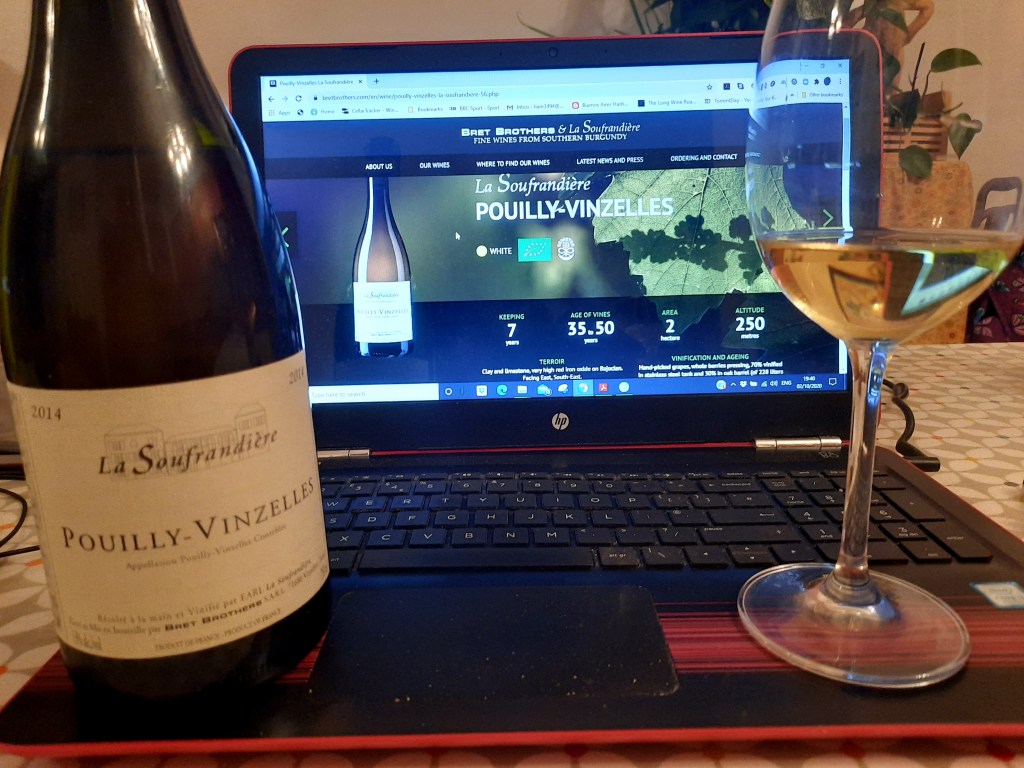
This example, a White Burgundy from Pouilly-Vinzelles, hits the spot. The Pouilly=Vinzelles Appellation Controlée is very small, but it fights large. The vines planted vary between 35 to 55 years old, all managed by hand, and the grapes are fermented 80% in tank and 20% in barrel, leaving subtle oak flavours, rather than the overpowering wood of olden days.

An excellent White Burgundy, at the peak of its drinking. Aromas of pears and vanilla struck me, and on the palate the acidity was refreshingly citrussy, before the rounded mouthful of tropical fruit took over, and left a finish that lingered long after the swallow. The buttery texture of the wine left me wanting more, and for those that are still in the ABC Camp, I challenge you to keep that opinion if you were to drink this heavenly delight.

First Taste of the 2017 Chianti Colli Senesi – San Nicola.

My first taste of the 2017 San Nicola from Campochiarenti, following its arrival last week. I am never sure whether to decant a wine such as this, but as I was longing to try the wine, I decided against it this time. With a minimum of 85% Sangiovese, the ruby colour that swirled in my glass showed up well, with a translucent appearance.

On the nose, my initial reaction was that maybe a decant would have been worth a wait, as while I could smell the cherries, there was a residual aroma of gamey-ness lying behind the fruit, with a spicy-ness tinged with tobacco.

Again on the palate, the cherry and redcurrant fruits were there, but there was that underlying bitterness, synonymous more with a Burgundy, of the farm, as the soft tannins merged with the acidity levels, balancing each other out, leaving a medium plus body in the mouth, and a lengthy finish, with hints of tobacco left in the mouth, and black pepper on the plate.

As the evening progressed, and the bottle lightened, the farmyard dissipated, leaving the fruit far more prevalent, and the finish mellowed into a pleasing residual, the wine opening up wonderfully well.

Although youthful, and will clearly benefit from resting in the cellar for a while, with a decant, and allowing some breath, the wine opens up to an excellent drink right now.

Comparing it to the 2016 I was drinking last year is difficult, and with no more 16 in my cellar, I cannot do a direct comparison. Looking at my notes, I see that I decanted the 16 and it drank superbly, so, this is where I will go, and allow some air when I uncork the next bottle of this wonderful wine.

A “New” New World Adventure

A few months ago, during this long summer spring and summer of isolation brought about by Covid-19, I watched a number of Instagram Live chats about the burgeoning wine developments coming from the Principality of Wales.

Yes, Wine from Wales!

I will confess to having a limited knowledge of the Wine Industry in England, and now Wales, having returned home from England twenty years ago, when the wine industry was still in its infancy, only really having a vague idea that there was some very nice sparkling wines starting to come out of the south-east of England, although none had passed my lips. I recall back in the 70’s, working in Victoria Wine as a student, that we stocked some sparkling wines, Concorde , that were classed as British Wines. They were the cheapest on the shelves, and although I never tasted them, my understanding was that they were pretty average to say the least. (The term British Wine generally refers to wines made from imported fruit concentrate, are generally sweet, and basic quality.)

I came across this advert for them….

We have moved on a long way from those days, and today, English Wines are making inroads in the Global Market Place, albeit in a small way so far, due to the limited volume being produced. However, the quality of the wines being produced in England has certainly caught the eye of wine judges in International Competitions, and today, English Sparkling Wines are routinely compared with French Champagne, with more to come.

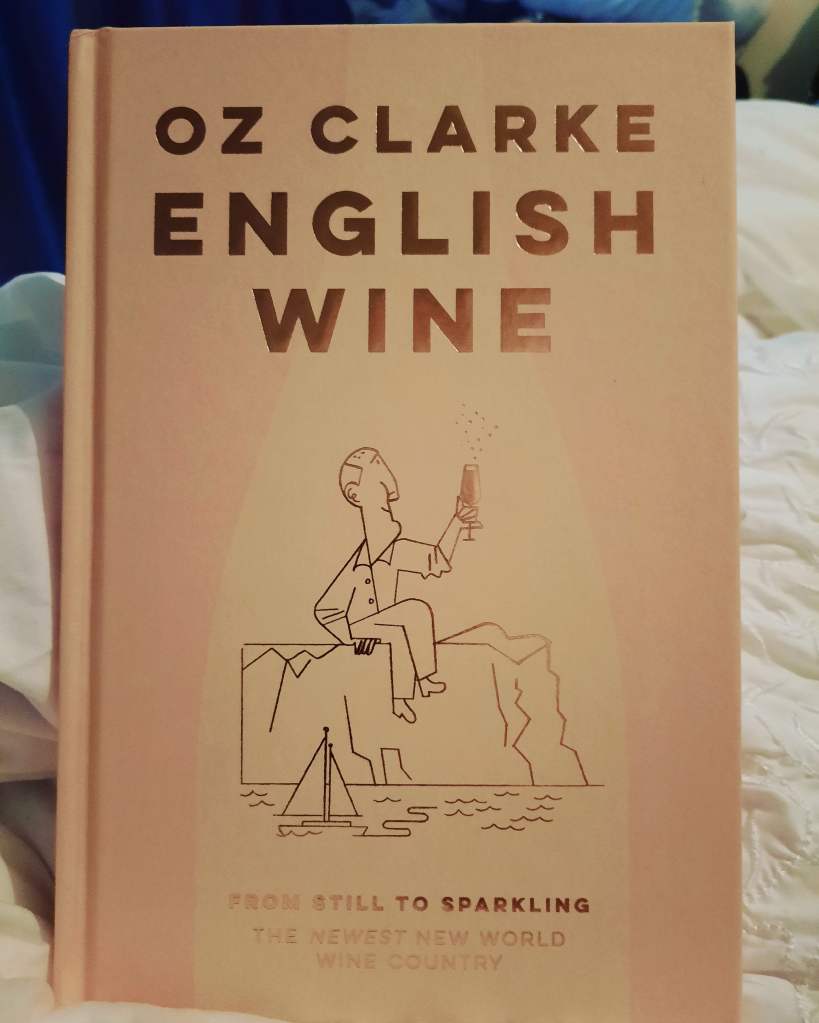
So much so, that Oz Clarke, a long time champion of the developing English Scene has released his recent book, titled English Wine, with a note apologising to the Welsh for not adding them to the title, and hoping they would forgive him for not writing English & Welsh Wine every time… We shall see if they forgive him. The book itself is a masterpiece of writing, if you haven’t read Oz’s writing before, I highly recommend his way with words, and his many books on our favourite subject. The tome is a tour de force around England and Wales, and his prose makes it hard to put down.

All this leads me back to Wales, and my new found interest in an absolutely New World Area, although there were wines produced at Castle Coch in the Vale of Glamorgan up to the beginning of the last century, around 1920, when the vines were pulled, and there was to be another 30 plus years before commercial vineyards were to start appearing again, anywhere within the British Isles.

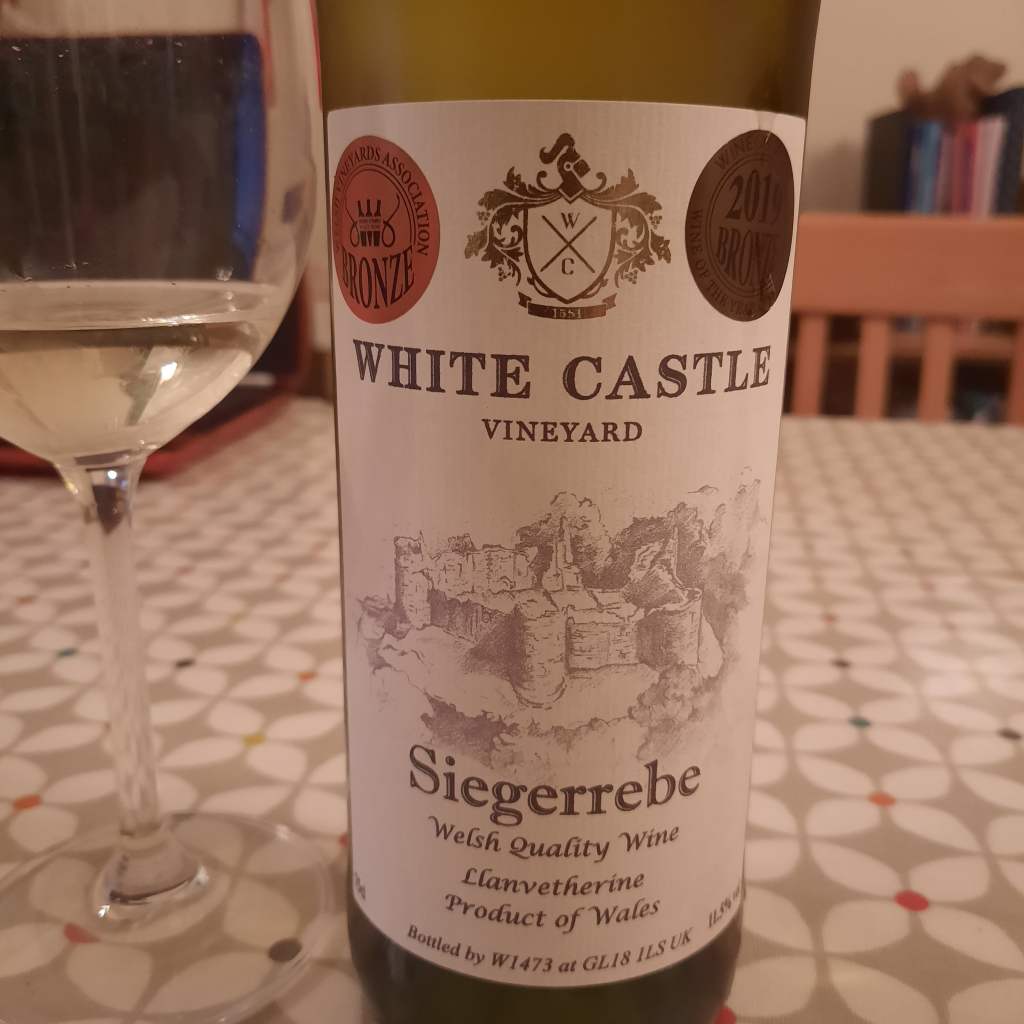
The Instagram Live Chats I watched seem to feature a certain individual, who is absolutely passionate about Welsh Wine, Robb Merchant. His story is well told by Oz in his book, suffice to say he didn’t come to wine through family inheritance, in fact, after buying a small farm, it was his wife, Nicola who had the dream, and together they have developed White Castle Vineyard, in Abergavenney, Monmouthshire, and I was intrigued. They produce a range of wines, from sparkling, through to the reds of Rondo, Regent and Pinot Noir Précoce (early ripening Pinot), and a white from Siegerrebe, and I couldn’t resist placing an order for some, directly from Robb at the farm.

I was able to get hold of the Pinot Noir Précoce 2018, and the Regent 2017 from White Castle, but as yet I haven’t had an opportunity to taste them. I have, however, had the pleasure of exploring a totally new grape to me, their 2018 Siegerebbe.

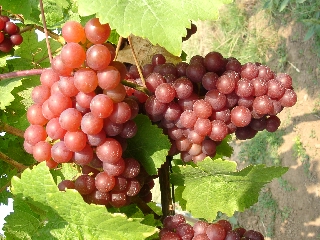
Siegerrebe is a white wine grape, created in Germany in 1929, by crossing Madeleine Angevine and Gewurztraminer, and is mainly found in its native country, along with small plantings in Canada, as well as England and Wales. Obviously it is a lover of cool climate, budding late, but ripening early, and it may have found its home in the Welsh countryide.

I found the wine to be light straw in colour, and it had sweet aromas of fruit emanating on the nose, with peach and orange overlaying a somewhat floral aspect at first. I was expecting low acidity, but felt that the sharpness was still there to enrich the texture, and maybe there were hints of spice on the finish, but it was the light summer stone fruits that were prevalent on the palate, maybe some pink grapefruit too, and these remained on the finish, with the flavours to be savoured as I finished my first glass.

All in all, a very enjoyable wine, paired well, with a Thai Curry, as you would expect from a relative of Gewurztraminer, and I believe it would go well with any light spiced dish, or white meat salad. A summer drink, chilled it would go well sat out on a warm day, as a substitute for Rosé, with a handful of nuts, or as an aperitif before dinner as we head into the autumnal days in September. I look forward to sampling the sibling reds that Robb produces in the days ahead.

I was also able to get hold of some other Welsh Wines from Montgomery Vineyard, in Cefn-Y-Coed, their Rondo, Pinot Noir, and a Bacchus/Solaris blend, and I have those to look forward to in due course. There are a number of other small beacons on the Welsh Wine Industry, and while the scale may be small to date, the future is definitely bright, and book titles may have to change to incorporate the “New” New World Wines of Wales before too long.

Unboxing My Wine – The Tingle…

The Complete Set.

I wrote quite recently about the beauty of being in a Wine Club and the excitement that comes with every arrival – a journey into the unknown. Opening the box and pulling out one joyous adventure at a time, wondering what the next delight will be.

(As I’m sure you can work out, if you would like more information on the wines I describe below, I have provided links to the Winemakers, the locations and even the odd link to a poet! Just click on the link and you will be whisked away).

Last week, my latest arrival was delivered from my Irish Wine Explorers Club from the wonderful folk at Wines Direct, and needless to say, I was far from disappointed with the gems that sprang forth.

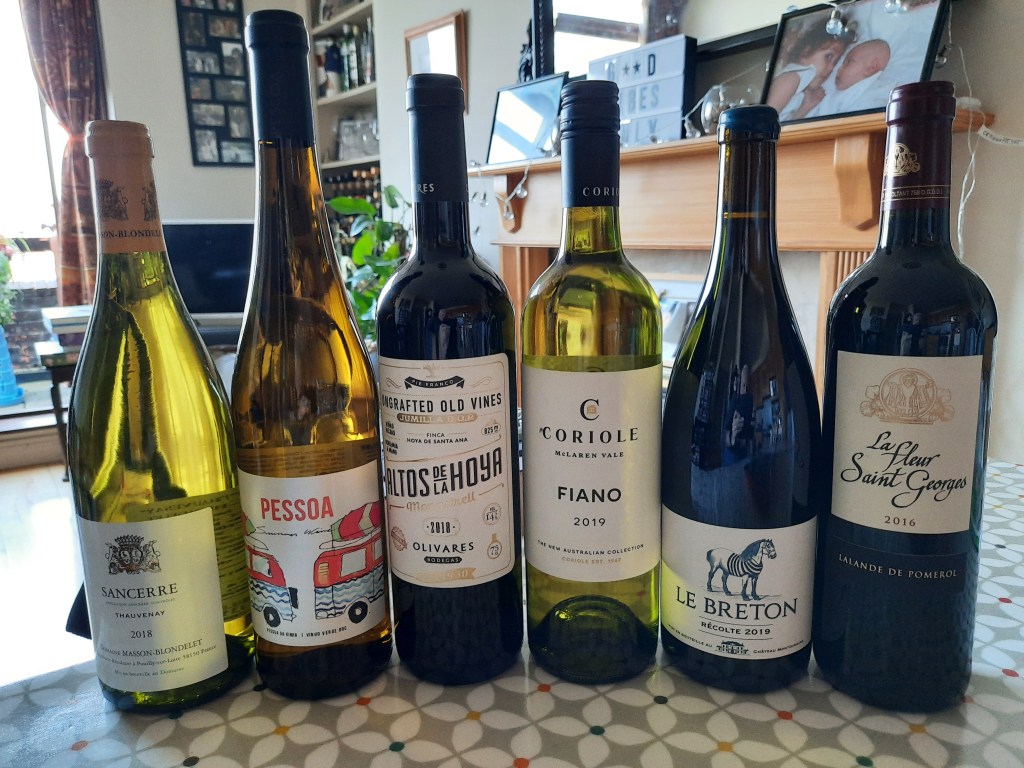
The first out of the box was from the Loire Valley. A 2018 vintage Domaine Masson-Blondelet, Sancerre AOP, from the family run estate in the heart of the Pouilly-Fume Appellation. When I went over to their website, I found some of the best technical sheets I’ve seen, giving full details of the wine, and well worth a look for the geek in us all.

Next up, was the Pessoa from Portugal, Vinho Verde DOC wine, and I understand this is VV but not as you know it, made from the Loureiro grape, but in a Kabinett style. The winemaker, Jorge Goncalves, although Portuguese by birth was brought up in Germany, and studied wine making at Geisenheim University before travelling the world to hone his skills, reaching South Africa where he learned the secret to blend New World fashions to the Old World elegance, and he returned to Portugal to start up his winery, named after Fernando Pessoa one of Portugal’s most famous poets and writers (See you can learn more than just wine here!).

Third out of the box, and the first Red was a wine I have had the pleasure of before in earlier vintages, this being a 2018 Monastrell from Jumilla DO in Spain, and the Altos de La Hoya old vines of the Olivares Fernandez family. I’m looking forward to the deep ruby and dark fruits of this one.

Next up, the third of the white wines, and a Fiano from Coriole. Now, anyone who knows me, will understand that I have a huge love of Italian wines, and whilst I would never be presumptuous to believe I know all the makers of Fiano from Campania or Sicily, this was a new name for me – WAIT A SECOND – Underneath the name of the wine were the words McLaren Vale, definitely a new region of Italy to me! Yes, this Fiano is the first to come from Australia, and the hands of Mark Lloyd’s family. Another find from the folk at Wines Direct that will be enticing me to sample very soon.

Only two to go now, and these would both be red, unless I am very much mistaken. And lo and behold, it was back to France, after out surprise visit to South Australia, and back to the Loire Valley, although this time for a Cabernet Franc from Chateau de Montdomaine , from the hands of Frederick Plou and his wife Louisa, “Le Breton 2018“. This will be a good wine to eat with a hearty French dish such as boeuf bourguignon or a coq au vin, so it may lay on the shelf until later in the year. I have heard that the family make an exquisite Malbec, so knowing my love of that grape, I’ll be looking out for that in the future.

The box is nearly empty now, and the last bottle is always tinged with sadness as I reach into the empty sleeve of the winebox, knowing that it will be a month before I have the tingle of excitement again. But, I was saving the best, unknown to me, for last – with the emerging bottle being a Bordeaux, the label indicating Chateau La Fleur St Georges from Lalande de Pomerol AOC, the second wine of La Fleur de Bouard, on the right bank, in that wine mecca of the west of France. The winery is owned by the De Bouard family, who, for the connoisseurs amongst us, own the 1er Grand Cru Classé, Chateau Angelus of Saint-Emillion. Hubert de Bourd de Laforest has put as much pride into developing this gem as he has with every other wine he has been involved with in producing over more than 25 years in the profession. Again a wine for a hearty occasion, a beef dish, maybe stretch to some game, definitely one to savour me thinks.

So, the box is now empty, the wines are now on the rack, and while the excitement of unpacking the case is now over for another month, I have so much to look forward to from this months selection. Before you know it, another arrival will be sat on the table awaiting opening, and the journey around the world of wine will begin again – I’ll let you know……..